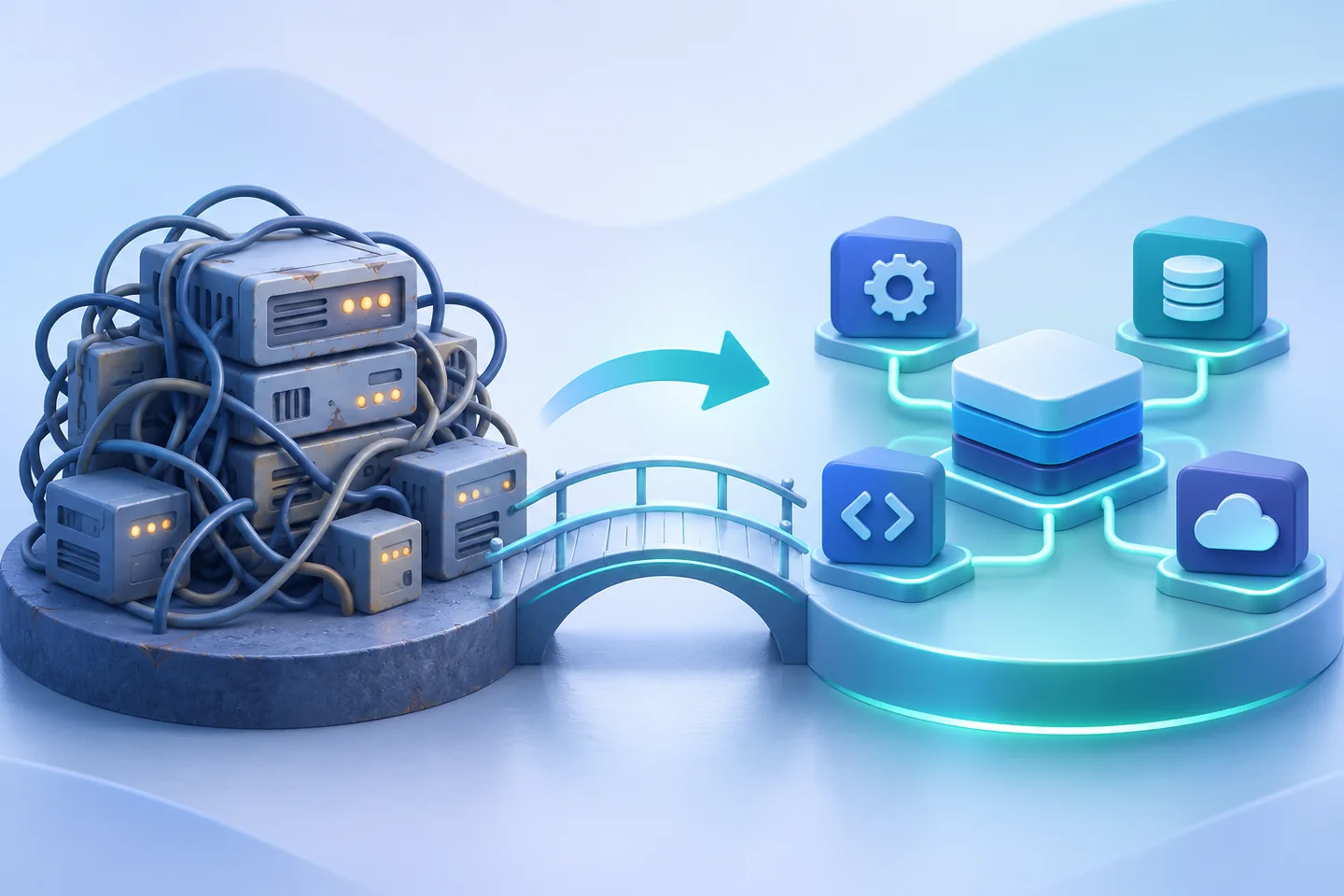
A legacy PHP application may still perform essential business work even when its structure makes changes difficult. Modernisation should preserve the workflows people rely on while reducing operational risk. Begin with an inventory and a migration boundary rather than an immediate commitment to rewrite everything.
Discover what the application really does
List scheduled jobs, reports, external integrations and manually triggered scripts. Interview the people who close accounts, reconcile stock or export customer records. Important behaviour is often hidden outside the main navigation.
Create representative checks around the most valuable journeys before changing their implementation. Record current outputs for known inputs, investigate surprising behaviour and distinguish intentional rules from accidental defects.
Choose a replacement boundary
A manageable first boundary might be reporting, a customer portal or a single integration. Keep the ownership of shared data explicit. Two applications updating the same tables with different assumptions can create subtle inconsistencies.
Upgrade dependencies in a staging environment that resembles production. Check runtime compatibility, database behaviour and background tasks. A successful home page request does not establish that the application’s nightly processing still works.
Plan the cutover and rollback together
For each phase, specify which traffic moves, how writes are handled and how results will be reconciled. Rehearse migrations using a protected copy of representative data. Measure the time required rather than assuming the change fits a maintenance window.
Rollback may require more than switching code versions if the new release has changed data. Prefer compatible schema changes, keep backups and document who can stop the rollout. Release smaller increments so business users can validate behaviour before the next boundary moves.
Frequently asked question
When is a full rewrite justified?
Consider it when the existing design cannot support essential requirements and incremental replacement would be more difficult to operate. Compare migration risk, data conversion and ongoing support costs before choosing.
Discuss your project
Explore our maintenance and support services or contact Chronex Technologies with your current workflow, integration requirements and launch priorities. A useful first conversation should identify the smallest workable release, the main risks and how success will be measured.