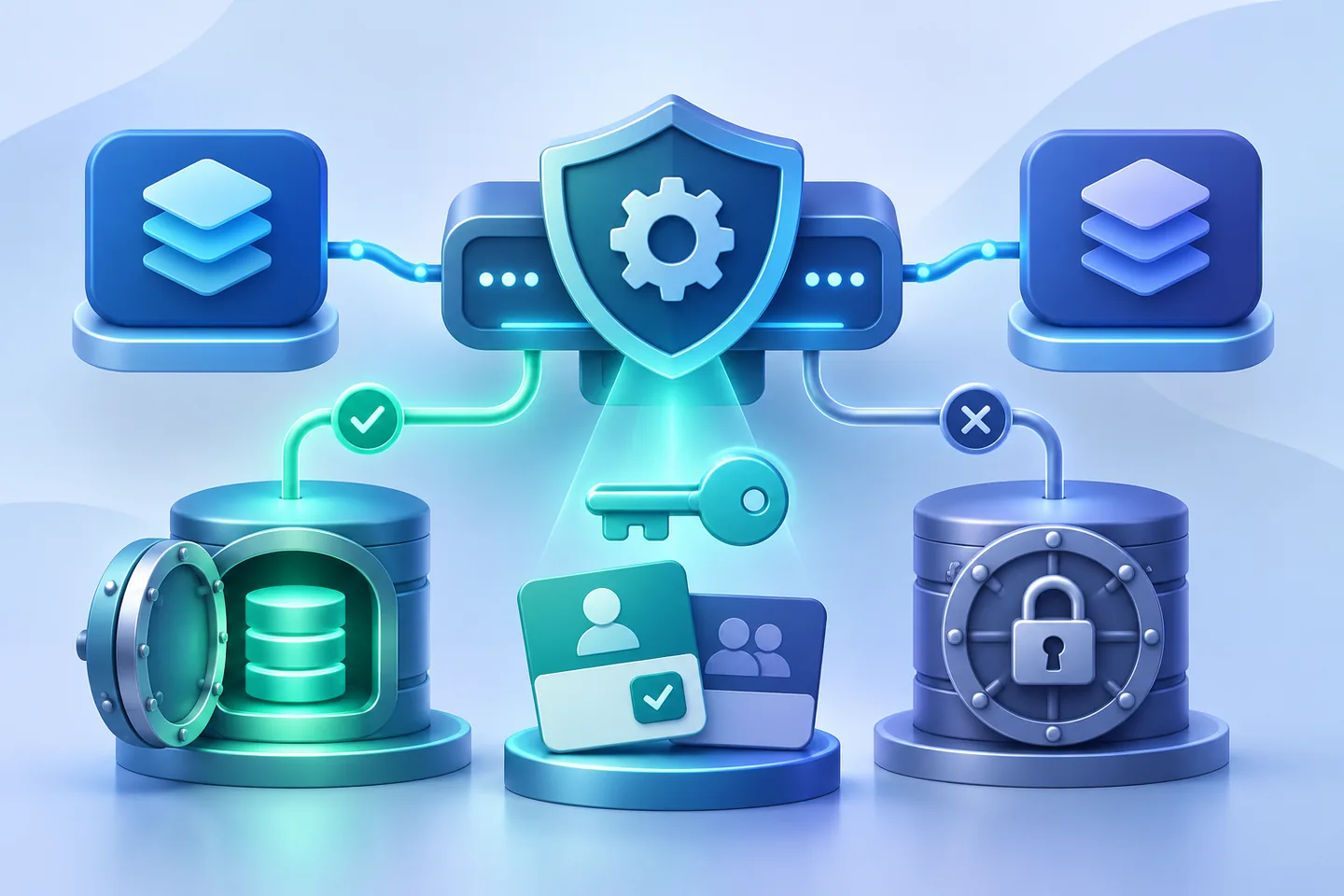
PHP application security depends on how requests, data and permissions are handled throughout the application. A secure login screen cannot protect a download endpoint that exposes another customer’s files. Review complete user journeys and the records each role may access.
Protect data at its boundaries
Validate request fields against the business operation being performed. Use parameterised database queries rather than composing SQL from incoming text. Escape output for its destination: HTML text, attributes and JavaScript have different handling requirements.
Check authorisation whenever an object is read or changed. An authenticated user requesting invoice 204 still needs permission to view that invoice. Include negative checks for another user’s identifier, deleted records and administrative operations.
Review sessions and file handling
Require secure transport and configure session cookies for the deployment. Rotate session identifiers after authentication and end sessions appropriately at logout. Protect state-changing browser requests against cross-site request forgery.
Treat uploads as untrusted content. Restrict permitted formats and size, inspect the file rather than trusting its extension, and store it where the web server cannot execute it. Serve private downloads only after checking the current user’s permission.
Make production failures safe
Keep secrets outside publicly accessible files and avoid returning stack traces to visitors. Log enough information to investigate a failure without recording passwords or full access tokens. Review dependency updates and the support status of the deployed PHP runtime.
Before release, test password reset, account suspension and permission removal. Ask whether access disappears immediately or survives in a cache or long-lived token. These transitions often reveal gaps that normal successful sign-in tests miss.
Frequently asked question
Is input validation enough to prevent injection?
No. Validation is one layer. Parameterised queries, context-appropriate output escaping, careful command execution and correctly enforced permissions address different risks.
Further reading
For implementation details, consult PHP security manual. Recommendations in this article are planning guidance; validate them against your application and deployed versions.
Discuss your project
Explore our web development services or contact Chronex Technologies with your current workflow, integration requirements and launch priorities. A useful first conversation should identify the smallest workable release, the main risks and how success will be measured.