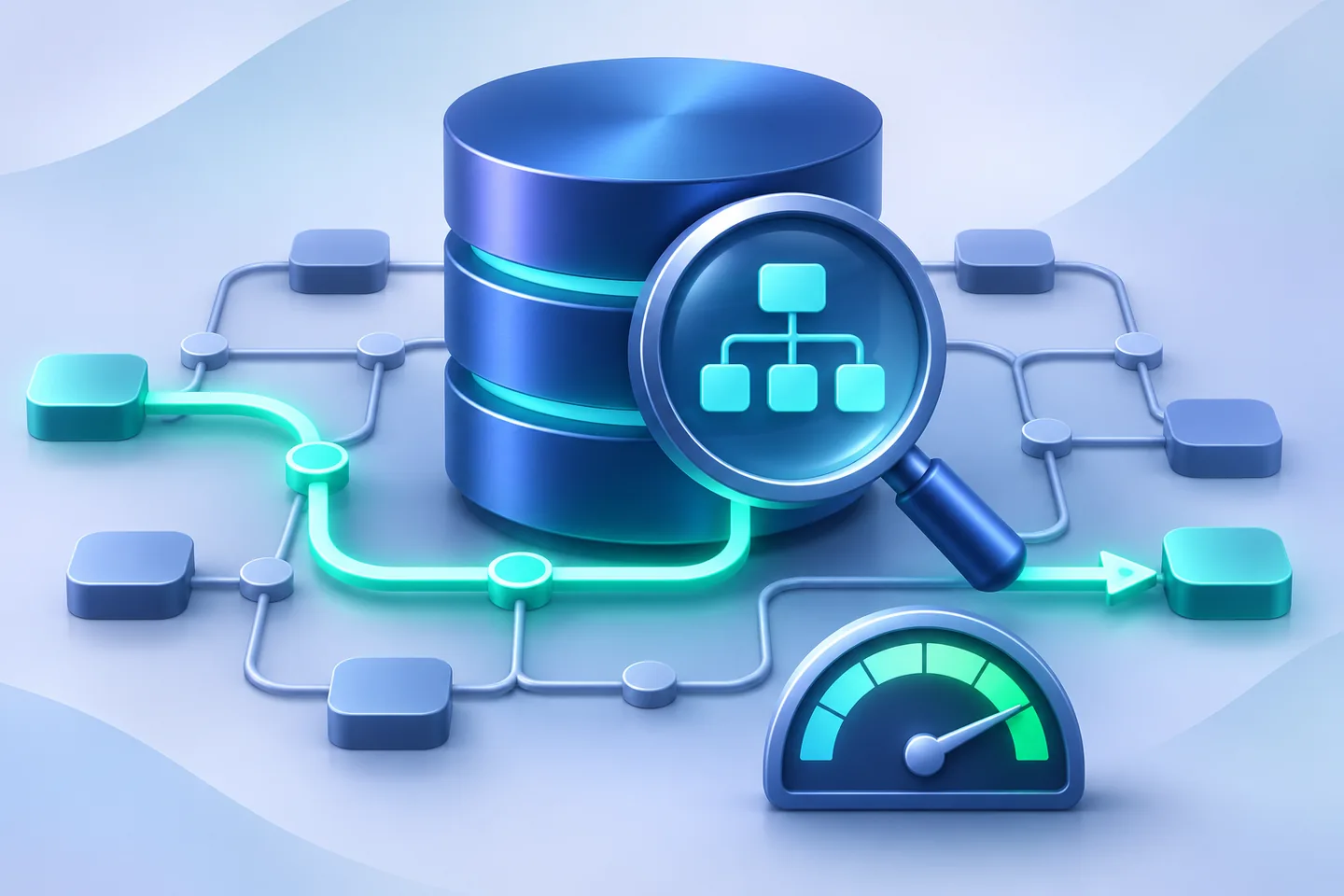
Database performance problems often become visible as slow screens, delayed reports or workers that cannot keep up. Start by identifying the expensive queries and the workload that triggers them. More server capacity may hide the symptom without improving the underlying access pattern.
Measure the query in context
Capture query duration, frequency and the number of rows examined or returned where the database exposes those measurements. A moderately slow query executed hundreds of times per request can matter more than a rare long-running report.
Check for repeated queries inside loops and for endpoints that fetch far more columns or records than they display. Use realistic data volumes in investigation; a plan that works on a tiny development database may not represent production.
Match indexes to actual access patterns
Inspect the query plan before adding an index. Consider the filter, join and sort conditions together. Composite index order and selectivity affect whether an index supports the intended query. Validate the result with your database engine and version.
Indexes also consume storage and add work to writes. Remove redundant proposals rather than indexing every field. Review how pagination behaves as tables grow; repeatedly skipping large offsets can become expensive for some access patterns.
Protect correctness while improving speed
Do not replace transactional checks with stale cached values for operations that require current state. Define which reports tolerate delay and which actions need immediate consistency. Cache invalidation is part of the design, not a later detail.
After each change, compare response time, database load and write performance using the same workload. Check lock contention and long-running transactions when throughput falls under concurrency. Keep a record of the measurement so future changes can be judged against evidence.
Frequently asked question
Will adding a cache solve a slow database?
It may reduce repeated reads, but it introduces freshness and invalidation decisions. First investigate inefficient queries, excessive data retrieval and concurrency problems.
Discuss your project
Explore our data and business intelligence services or contact Chronex Technologies with your current workflow, integration requirements and launch priorities. A useful first conversation should identify the smallest workable release, the main risks and how success will be measured.