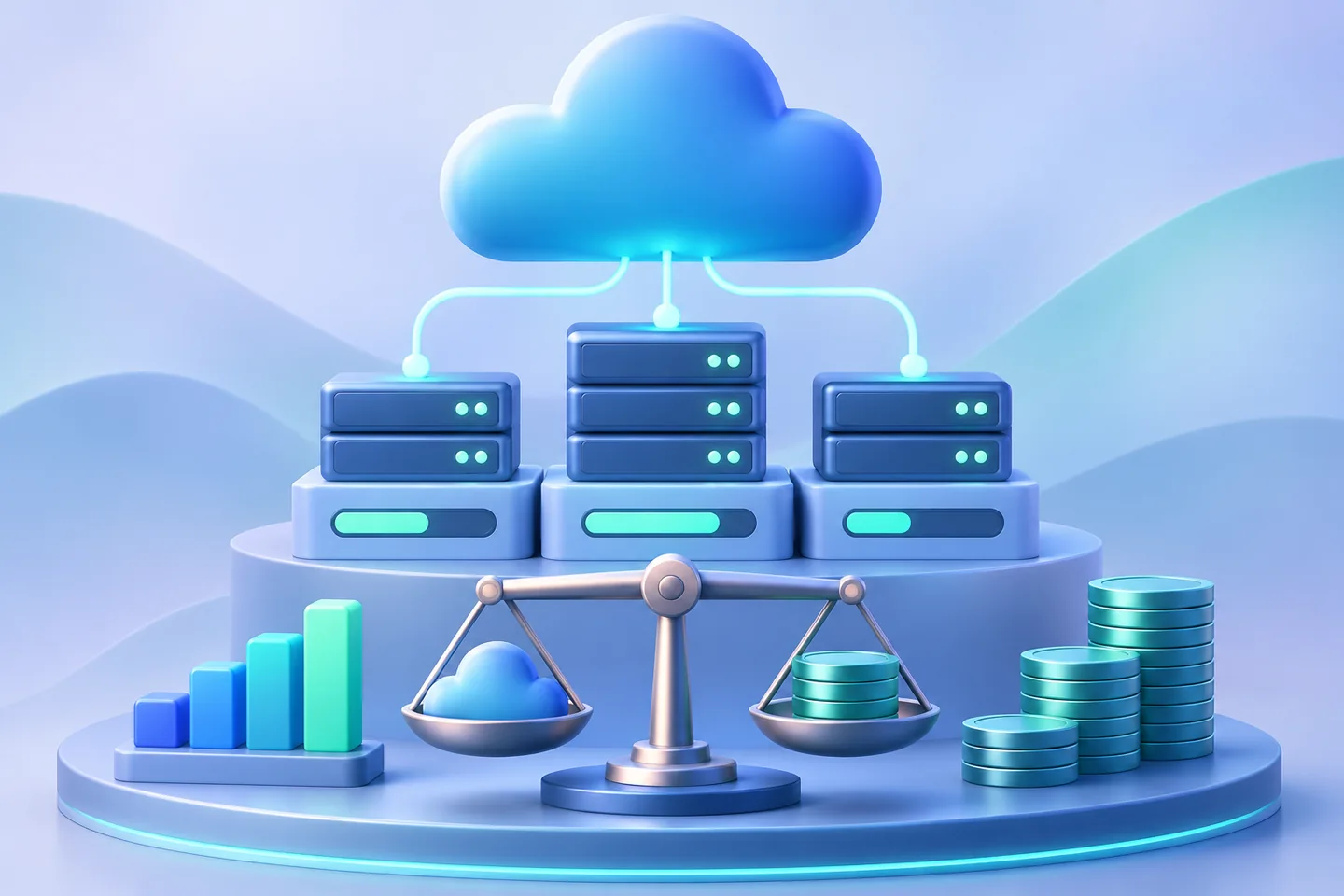
Cloud cost optimisation starts with understanding what each workload does and who owns its bill. Reducing infrastructure without considering reliability can make a cheap system expensive to operate. Measure cost alongside service quality and business demand.
Make the bill explainable
Group resources by application, environment and owner. Identify development systems that run continuously, forgotten storage and resources created for temporary experiments. Agree on naming and tagging practices before the next expansion.
Choose a useful unit of demand, such as active accounts, processed documents or completed orders. Cost per unit helps distinguish healthy growth from inefficient infrastructure. A larger bill can be reasonable if the workload has grown faster than its cost.
Reduce waste with controlled changes
Measure utilisation before resizing compute or database capacity. Schedule non-production resources when their availability requirements allow it. Review retention for logs, snapshots and files, keeping recovery and audit needs in mind.
Inspect data transfer paths and repeated processing. Moving the same large file across services can create costs that compute dashboards do not explain. Cache only where freshness requirements and invalidation rules are understood.
Review reliability and cost together
Set budgets and alerts, then assign an owner to investigate them. An alert without a response process does not control spend. Estimate the cost of backups, monitoring and disaster recovery as part of normal operation.
AWS’s Well-Architected Framework is one reference for examining tradeoffs across cost, reliability and other architectural concerns. Use workload-specific measurements when deciding what to change, and check performance and failure behaviour after each adjustment.
Frequently asked question
Should production always use the cheapest instance?
No. Compare the capacity and reliability required for the workload. A lower unit price may create more operational work or fail to meet demand.
Further reading
For implementation details, consult AWS Well-Architected Framework. Recommendations in this article are planning guidance; validate them against your application and deployed versions.
Discuss your project
Explore our cloud and DevOps services or contact Chronex Technologies with your current workflow, integration requirements and launch priorities. A useful first conversation should identify the smallest workable release, the main risks and how success will be measured.