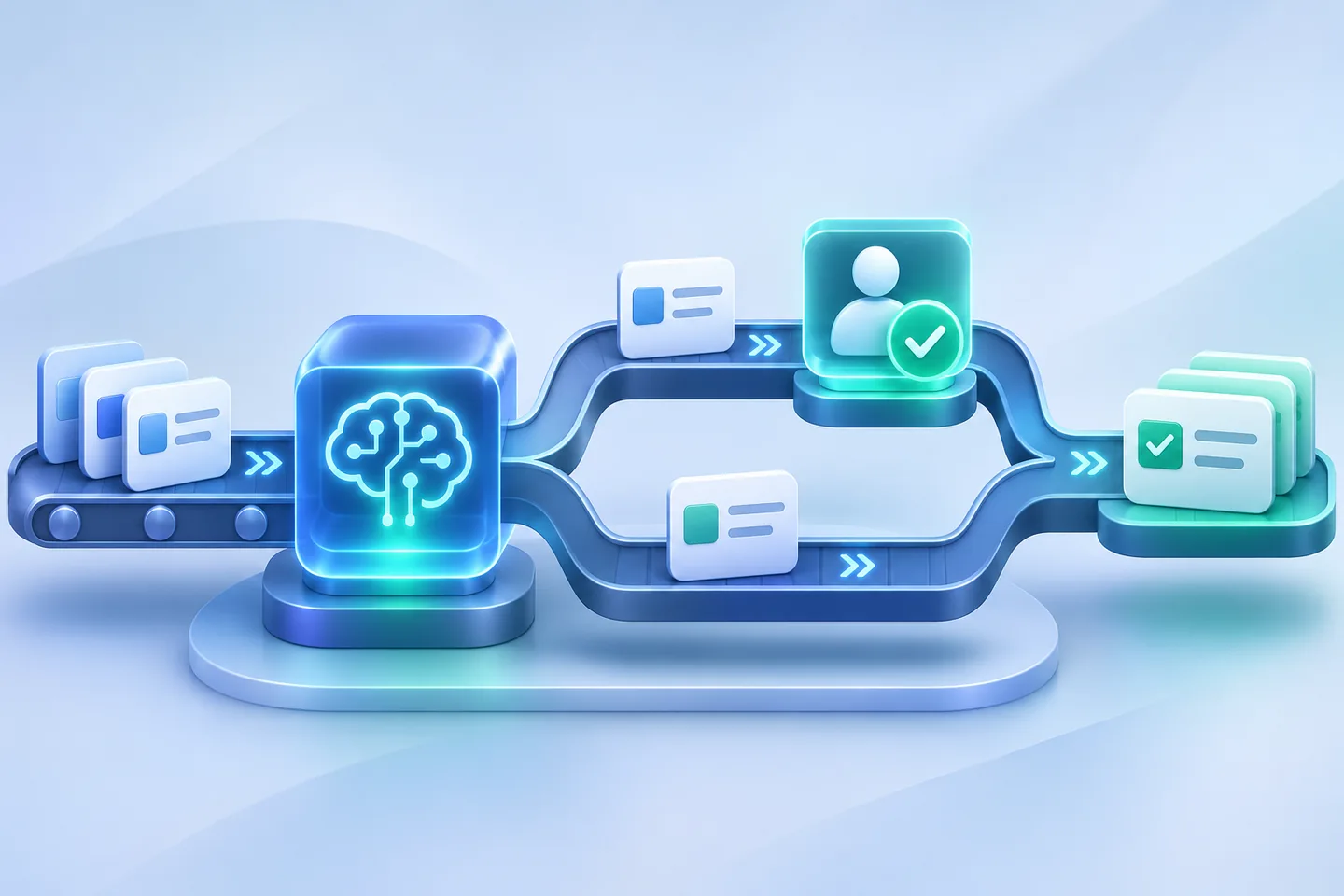
AI document processing converts information from files into structured records. A reliable system needs more than text recognition: it must identify the document, validate extracted values and explain which fields need human attention. This is especially important when an incorrect value could affect payments, inventory or customer accounts.
Define the output contract
List required fields, acceptable formats and the systems that will consume the result. For invoices, distinguish invoice number, supplier identifier, currency, line items and totals. Store the source file and page reference so reviewers can investigate a doubtful field.
Agree on what happens when a field is missing. Inventing an invoice number or guessing a bank account is unacceptable. Missing data should move the document to a clear exception state rather than quietly passing through.
Combine extraction with deterministic checks
Check arithmetic independently of the extraction model. Compare suppliers against an approved register and flag unexpected payment details. Use file fingerprints and business identifiers to detect duplicate uploads. A second copy should not create a second payable record.
Route uncertain fields to a review screen that places the extracted value beside the relevant document region. Let reviewers correct values without losing the original extraction. The audit trail should explain who approved the exported record.
Test variation and operational failures
Build an evaluation set with scans, rotated pages, multi-page documents and unfamiliar layouts. Track field accuracy and the proportion of documents needing review. Aggregate accuracy can hide a serious weakness in one critical field.
Also simulate export failures and interrupted processing. A retry should resume the workflow without creating duplicate records. Keep retention rules for originals and extracted data, and avoid exposing sensitive document text in ordinary application logs.
Frequently asked question
Can document processing run without human review?
Some low-risk, well-validated document types may support straight-through processing. Begin with review, measure field-level errors and keep high-impact exceptions under human control.
Discuss your project
Explore our AI and machine learning services or contact Chronex Technologies with your current workflow, integration requirements and launch priorities. A useful first conversation should identify the smallest workable release, the main risks and how success will be measured.