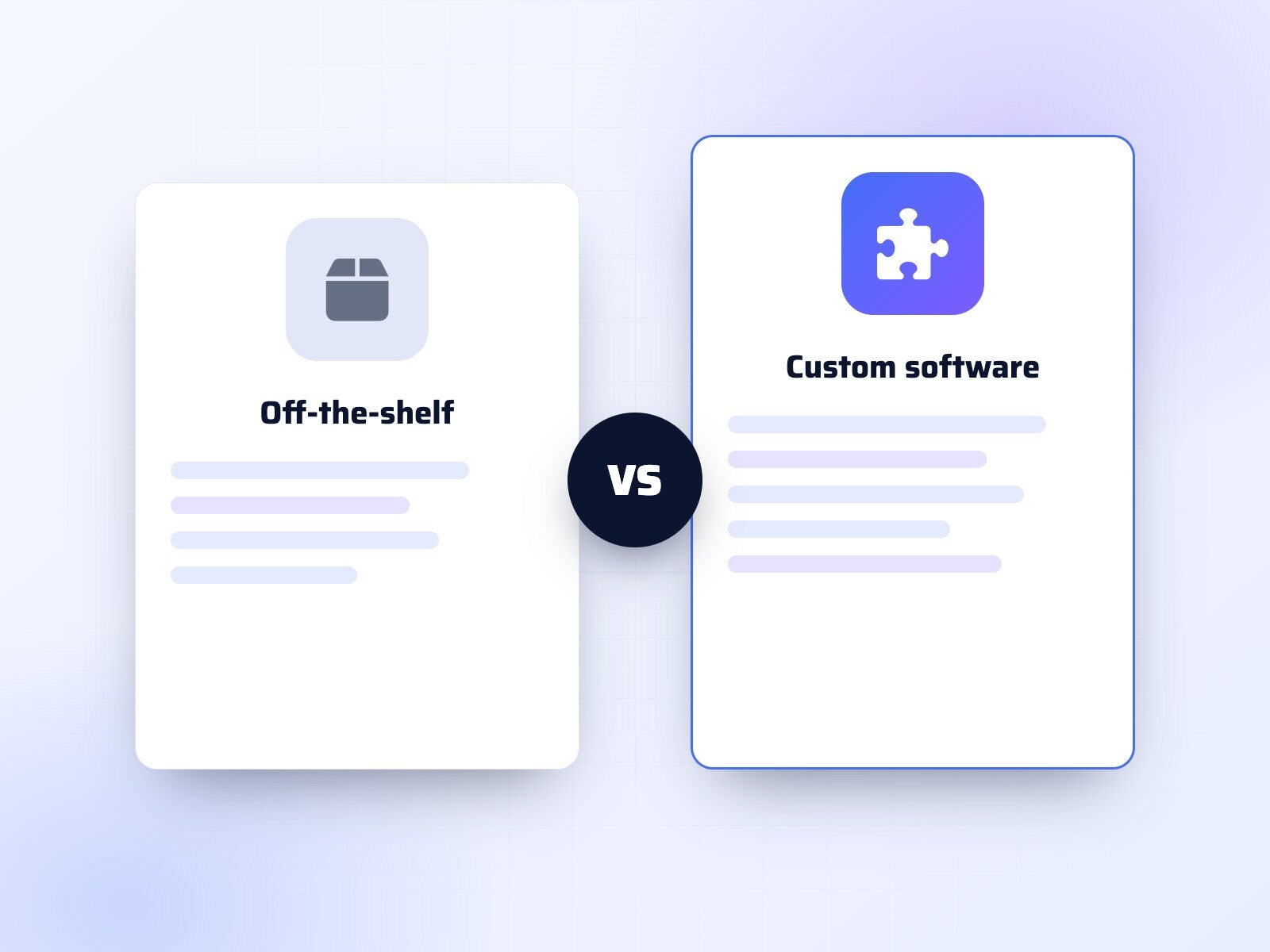
Most businesses start with off-the-shelf software, and for good reason. Tools for accounting, email marketing or project management are quick to set up, affordable and cover common needs well. As a business grows, though, many teams find themselves working around their software instead of with it.
So when does it make sense to build something custom? These are the questions we ask clients before recommending either option.
1. Is the process a competitive advantage?
If the way you quote, schedule, deliver or serve customers is what sets you apart, forcing it into a generic tool can erase that advantage. Custom software lets you keep doing things your way, only faster.
2. Are you paying for several tools that don't talk to each other?
Subscription costs add up quickly, and so does the time spent copying data between systems. A single custom platform, or a few well-built integrations, often pays for itself by removing that duplication.
3. How much time goes into manual workarounds?
Spreadsheets next to your main system, repeated data entry and reports built by hand are signs that your tools no longer fit. Multiply the hours lost each week by your team's hourly cost to see what the workaround really costs.
4. What will you need in two or three years?
Off-the-shelf tools can limit your growth through per-user pricing, missing features or data you can't easily export. Custom software is built to scale with you, and you own the code.
5. Is there a simpler answer?
Custom isn't always the right choice. If an existing product covers most of what you need, better configuration or a simple integration may be faster and cheaper. A good technology partner will tell you that honestly.
Our advice: list the tasks that take the most time and the tools involved, then talk it through with an expert. A short discovery session is usually enough to see whether you need custom software, an integration, or simply better use of what you already have.