
- chronextechnologies
- December 21, 2025
Coding Agents: The Future of Software Development Automation
Software development is undergoing a fundamental shift. What started with simple code autocomplete tools has evolved into coding agents—intelligent, autonomous systems capable of planning, writing, testing, and even maintaining software with minimal human intervention. These agents are redefining how developers build applications, improve productivity, and manage complex systems.
In this article, we’ll explore what coding agents are, how they work, where they add real value, and why they are becoming a cornerstone of modern software engineering.
What Are Coding Agents?
Coding agents are AI-powered software entities designed to perform development tasks autonomously or semi-autonomously. Unlike traditional IDE helpers or static linters, coding agents can:
Understand high-level goals (e.g., “build a REST API for user management”)
Break tasks into steps (design → code → test → debug)
Interact with tools (IDEs, Git, CI/CD pipelines, APIs)
Iterate based on feedback and errors
In short, they behave less like tools and more like junior developers that never get tired.
How Coding Agents Work
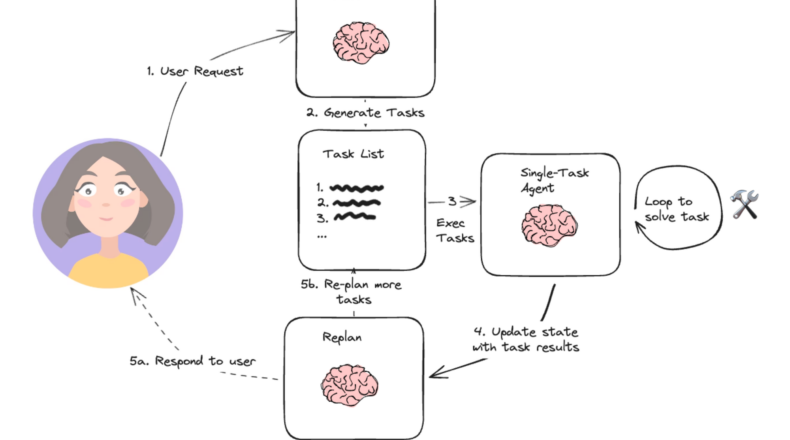
At a high level, coding agents combine several components:
1. Reasoning Engine
This is the “brain” of the agent—often powered by large language models (LLMs). It interprets requirements, plans tasks, and decides next actions.
2. Tool Integration
Agents can call external tools such as:
Code editors and repositories
Test runners
Package managers
Cloud services and APIs
This allows them to move beyond text generation into real execution.
3. Memory & Context
Modern coding agents retain context across steps:
Project structure
Previous errors and fixes
Coding standards and architectural rules
This enables long-running, multi-step workflows.
4. Feedback Loop
Agents observe outcomes (test failures, build errors, lint warnings) and refine their approach automatically—closing the loop between intent and execution.
Key Use Cases of Coding Agents
🚀 Accelerated Development
Coding agents can scaffold projects, generate boilerplate, and implement repetitive patterns—freeing developers to focus on design and logic.
🧪 Automated Testing & Debugging
Agents can:
Write unit and integration tests
Run test suites
Analyze failures and propose fixes
This dramatically reduces feedback cycles.
🔧 Legacy Code Modernization
From refactoring monoliths to upgrading libraries, coding agents help teams modernize old codebases safely and systematically.
⚙️ DevOps & CI/CD Automation
Agents can configure pipelines, monitor builds, and even fix broken deployments—bridging the gap between development and operations.
Benefits for Developers and Organizations
Productivity Boost: Less time spent on boilerplate and debugging
Consistency: Enforced coding standards and best practices
Scalability: One agent can support multiple teams or projects
Faster Time-to-Market: Features ship sooner with fewer errors
Rather than replacing developers, coding agents amplify developer impact.
Challenges and Considerations
Despite their promise, coding agents are not magic:
Governance & Safety: Agents must follow security, compliance, and architectural rules
Explainability: Teams need to understand why an agent made certain decisions
Human Oversight: Critical systems still require human review and approval
Successful adoption depends on treating coding agents as collaborators, not unchecked automation.
The Future of Coding Agents
The next generation of coding agents will be:
More domain-aware (finance, healthcare, telecom, enterprise systems)
Deeply integrated into enterprise workflows
Capable of handling long-horizon, end-to-end software delivery
As organizations embrace AI-driven development, coding agents will become as essential as version control and CI pipelines are today.
Conclusion
Coding agents represent a major leap forward in how software is built. By combining reasoning, tool usage, and continuous feedback, they move beyond assistance into true automation. For developers and businesses alike, embracing coding agents means building software faster, smarter, and at scale—without sacrificing quality or control.